
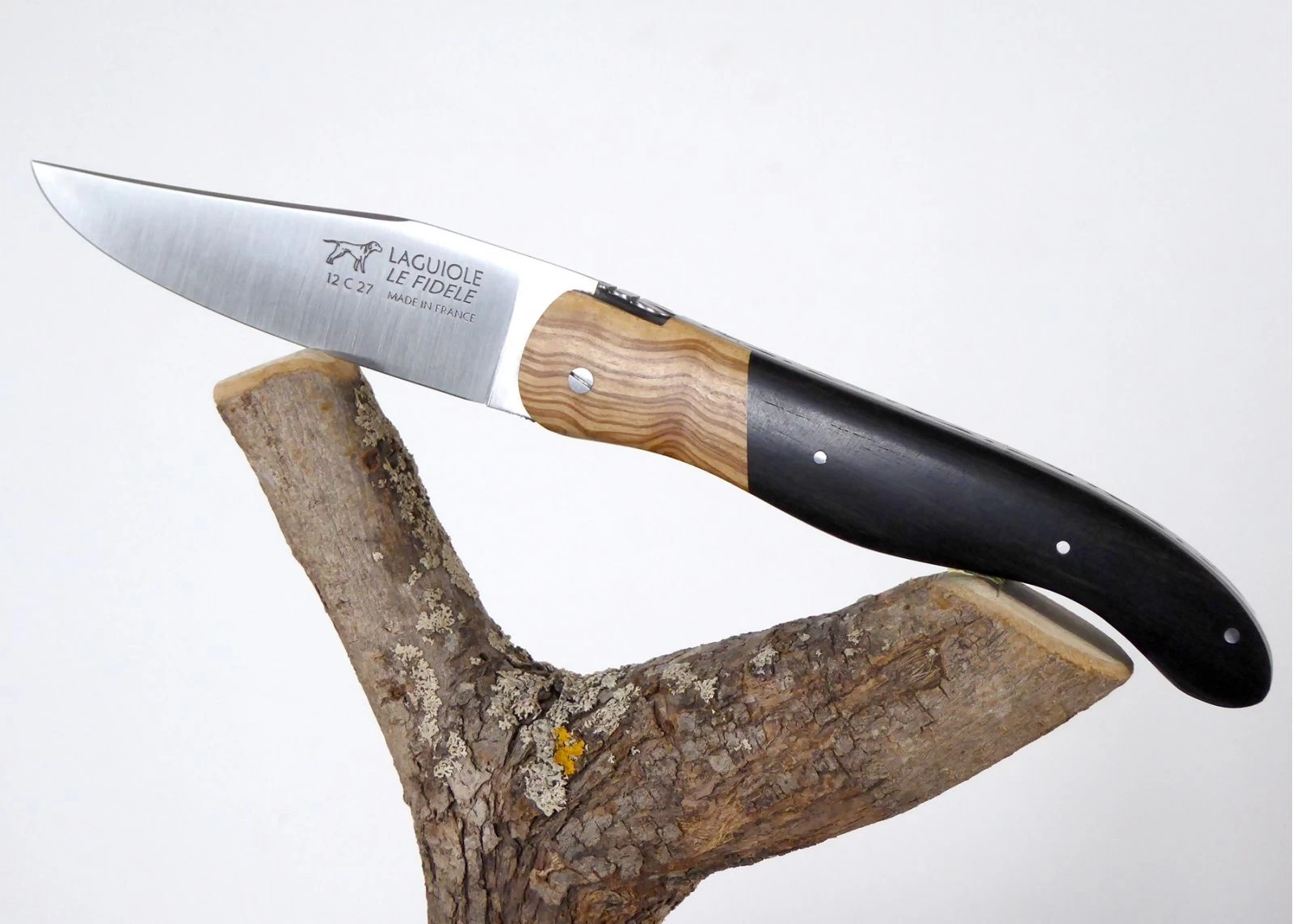
There is a version of buying a laguiole knife that goes badly, and it usually happens when someone picks a name they recognize, buys quickly without thinking too much about it, and ends up with something made outside France that carries the name without the substance behind it. And then there is the version that goes well, which is taking a bit of time to understand what you actually want, why the material choices matter, and what separates one range from another.
This guide is for the second version. No pressure, no jargon, just a clear look at what these knives are, how they are built, and how to find the one that suits you best.
The First Thing to Decide Is How You Will Use It
Before you think about handle materials or blade steel or bolster configurations, think about use. That single question shapes everything else.
If the knife will spend most of its time in your pocket and come out for everyday tasks, you want something practical and proportioned for carry. The traditional models open to 22cm and close down to 12cm. They are easy to carry, comfortable to use, and genuinely refined without feeling delicate.
If the knife will live in a kitchen drawer and come out for meals, steak knife sets are the obvious direction, bringing the laguiole identity to every plate without any compromise on quality.
If you are buying for a collector or for someone who will appreciate the craft behind the object as much as the object itself, the Prestige or Damascus ranges are worth serious consideration.
If outdoor use is the point, the hunting knife range is built for it with a forged spring, forged bee, and full handle construction designed to handle real field conditions.
Handles: The Decision You Will Spend the Most Time On
Ask anyone who owns more than one laguiole knife which part of the decision they enjoyed most and they will almost certainly say the handle. It is where the knife becomes personal. And the range on offer from these French workshops is genuinely remarkable.
Wood handles cover an enormous amount of aesthetic ground. Olive wood is one of the most beloved choices, pale, warm, with a golden grain that ages beautifully. Ebony is the opposite: dense, very dark, quietly serious. Bocote brings dramatic grain contrast. Juniper has a rural, outdoor character. Walnut is steady and unfussy. Briar root looks like something from a dream. Amboyna root is rich and warm. Violet wood is almost otherworldly in its color. Thuja root, pistachio, serpent wood, cocobolo, ironwood, yew, gaiac, padauk, curly maple, birch, rosewood, and boxwood round out a list that takes most people quite a while to work through properly.
Natural animal material handles tell a different story. Brown horn has been on these knives since they were first made, and the natural variation in each piece means yours will be like no one else’s. Blond horn tip is quieter and pale. Deer antler brings a rugged feel that suits the hunting range particularly well. Bovine bone is smooth and traditional. Giraffe bone has a visual impact that surprises people when they first see it. And in the rarest collections, mammoth ivory and mammoth molar handle materials are available for those who want something that cannot be replicated.
Because these are natural materials, no two handles are ever identical. That is not a quirk to tolerate. It is one of the genuine pleasures of owning something made this way.
Blade Steel: Stainless, Stainless Damascus, or Carbon Damascus
Most people start with 12C27 stainless steel and find it more than sufficient for everything they need a knife to do. It holds a good edge, resists corrosion without demanding special care, and sharpens easily at home. For an everyday carry knife or a steak knife set, it is the sensible and honest choice.
For those who want more, the Damascus editions open up a completely different conversation. The DS93X stainless Damascus is available in Twist and Vinland patterns, built to around 120 layers from two steels of different hardness. The result is a blade that performs excellently and looks genuinely stunning, with a visible pattern running through the steel that makes the knife impossible to mistake for anything ordinary. Care is simple: dry carefully before closing, sharpen regularly.
The hand forged carbon Damascus at around 520 layers is for those who want the absolute best in cutting performance and do not mind investing a little extra care in return. It sharpens to an exceptional edge, develops a patina that becomes personal over time, and carries a level of artisan investment that is visible in every layer of the blade. Dry it immediately after use, oil it occasionally, store it dry. Those habits quickly become second nature.
Four Ranges, Four Different Experiences
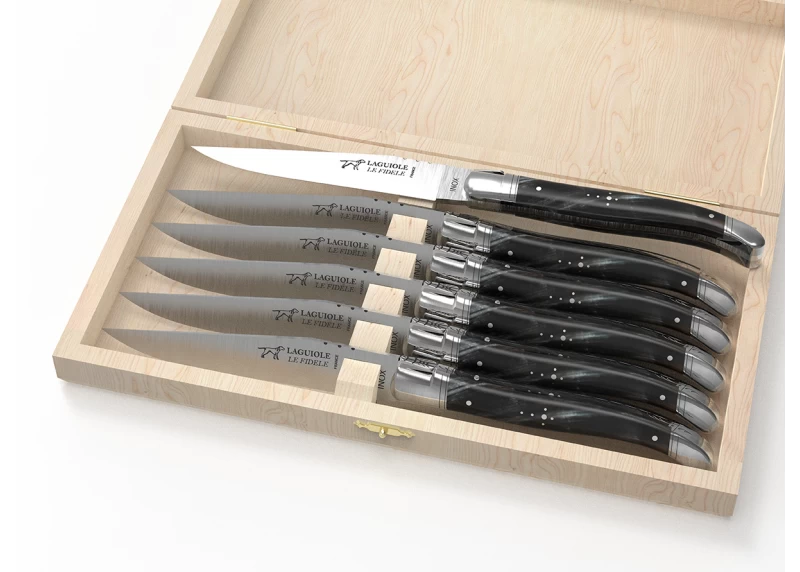
Understanding the structural differences between the main ranges makes the choice considerably easier:
Traditional one bolster: A single stainless bolster at the front of the handle. Welded bee on a traditional spring. Traditional guilloché. Clean, minimal, easy to live with. Available from around 90 euros.
Traditional two bolsters: Bolsters at both ends of the handle for a more reinforced feel. Same welded bee and traditional spring construction. The more classic looking of the two standard options. Available from around 90 euros.
Full handle: No bolsters. Forged bee on a forged spring. Hand guillochage on the spring and blade spine in one of three available patterns. Longer, cleaner handle profile. A more unified, considered aesthetic. Available from around 123 euros.
Prestige: The full handle construction as a foundation, then layered with additional details. Star rivets. Hand guilloched stainless liners inlaid with 2mm ebony wafers. Three guillochage pattern choices for the spring and blade spine. This is the range for people who appreciate finishing details and want a knife that rewards close inspection. Available from around 138 euros.
Why the Workshop Relationship Actually Matters
Because the laguiole name carries no geographic protection, it appears on knives made in dozens of countries under very different conditions. Some of those knives are fine for what they are. But if you are looking for genuine French craftsmanship, genuine materials, and the kind of quality that justifies keeping something for decades, the workshop behind the knife matters enormously.
The Le Fidèle workshops produce laguiole knives that Laguiole French Knives has sourced directly for more than 20 years. The founders visit the workshops themselves, follow the evolution of techniques and materials, and maintain the kind of relationship that only comes from consistent, long term commitment to a single standard. Every piece sold carries a lifetime warranty against manufacturing defects, which is the kind of guarantee that only makes sense when confidence in the product is genuine.
A Note on Giving One as a Gift
These knives appear as gifts constantly, and for good reason. They have real heritage. They are made by hand. They come in enough variety to feel genuinely chosen for a specific person rather than grabbed from a shelf. And they carry the kind of longevity that makes a gift feel meaningful rather than temporary.
For someone who loves food and cooking, a steak knife set or table set is an obvious and deeply appreciated choice. For an outdoor person, the hunting range. For a collector or someone who simply loves beautiful objects, a Prestige or Damascus model. For everyday carry, a traditional model in a handle material that suits their taste. The thought you put in shows in the object itself.
Conclusion
A laguiole knife rewards the time you spend choosing it. The handle material, the blade type, the range, the configuration, all of it adds up to something that feels specifically yours once it arrives. That is the nature of objects made one at a time by skilled hands rather than turned out in volume. Take your time. Choose well. The knife you end up with will still be with you in thirty years, and it will still feel right every time you pick it up.